
Keep Every Ecosystem Thriving
Elaborate, segment-by-segment husbandry guides — enclosure setup, temperature & humidity, diet, breeding and the mistakes to avoid — for everything Verdanest ships.
Isopod Care Guide
Everything you need to keep a thriving, self-sustaining isopod culture.
Enclosure & Substrate
Give every culture at least 2–4 inches of bioactive substrate to burrow into — a coco fibre / sphagnum peat / leaf litter blend holds moisture well while staying loose enough to tunnel through. Add cork bark and a leaf litter layer for surface cover, and make sure the enclosure has ventilation; a fully sealed container invites mould faster than it helps humidity.
Temperature & Humidity
Most hobby isopods do best between 20–28°C, but humidity needs vary by species — some Armadillidium morphs want it consistently high, while hardier Porcellio and Porcellionides species tolerate a drier gradient. The safest approach is to mist one side of the enclosure only, so the colony can move between moist and dry zones as needed.
Diet & Feeding
Leaf litter should be the everyday staple — it's both food and shelter. Supplement every week or two with a protein source (fish flake, dried shrimp, or a small piece of dog biscuit) and a calcium source (crushed cuttlebone or eggshell) to support healthy moults. Remove uneaten protein within a day or two to avoid mites and mould blooms.
Breeding & Population Management
Females carry fertilised eggs in a fluid-filled brood pouch (the marsupium) and release fully formed mancae after a few weeks. Once a culture is established in the right substrate and humidity, breeding is continuous — population booms are a sign of a healthy setup, not a problem. Thin out an overcrowded culture by moving a portion to a new bin rather than letting density spike.
Common Mistakes
The most common culture crashes come from overwatering (leading to mould and grain mites), skipping calcium supplementation (leading to failed moults), mixing incompatible species in one enclosure, or sealing a container so tightly that fresh air can't reach the substrate. When in doubt, err toward more ventilation and a drier gradient.
Species Quick Reference
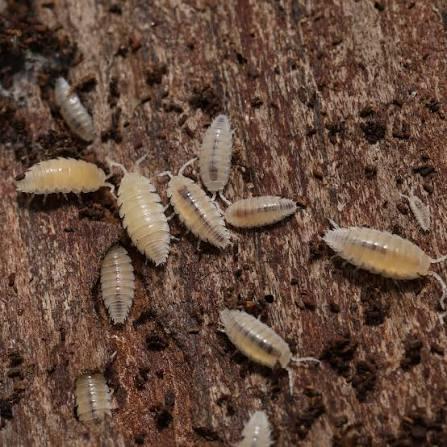
Dwarf White
Trichorhina tomentosaBest kept as a supplementary cleanup crew alongside springtails — rarely seen above the substrate surface.
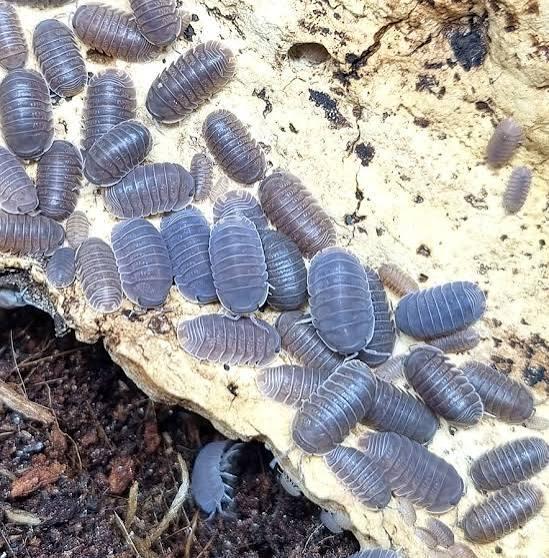
Murina Little Sea
Cubaris murina 'Little Sea'A soft blue-grey Cubaris that loves humidity — the easiest way to start keeping the genus.
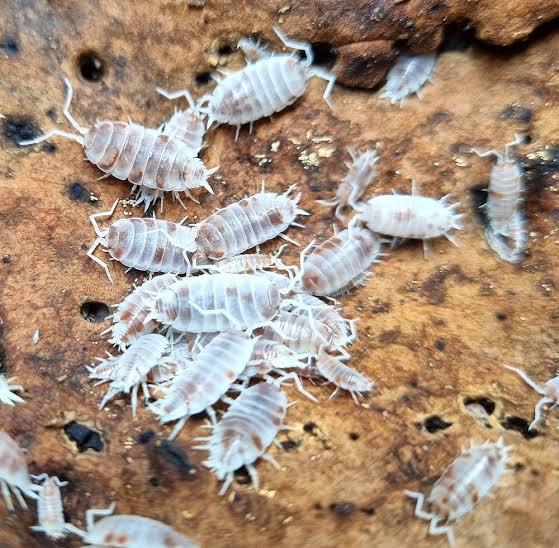
Orange Dalmatian
Porcellio scaber 'Orange Dalmatian'Speckle pattern gets more defined with age — hardy and easy to keep long-term.
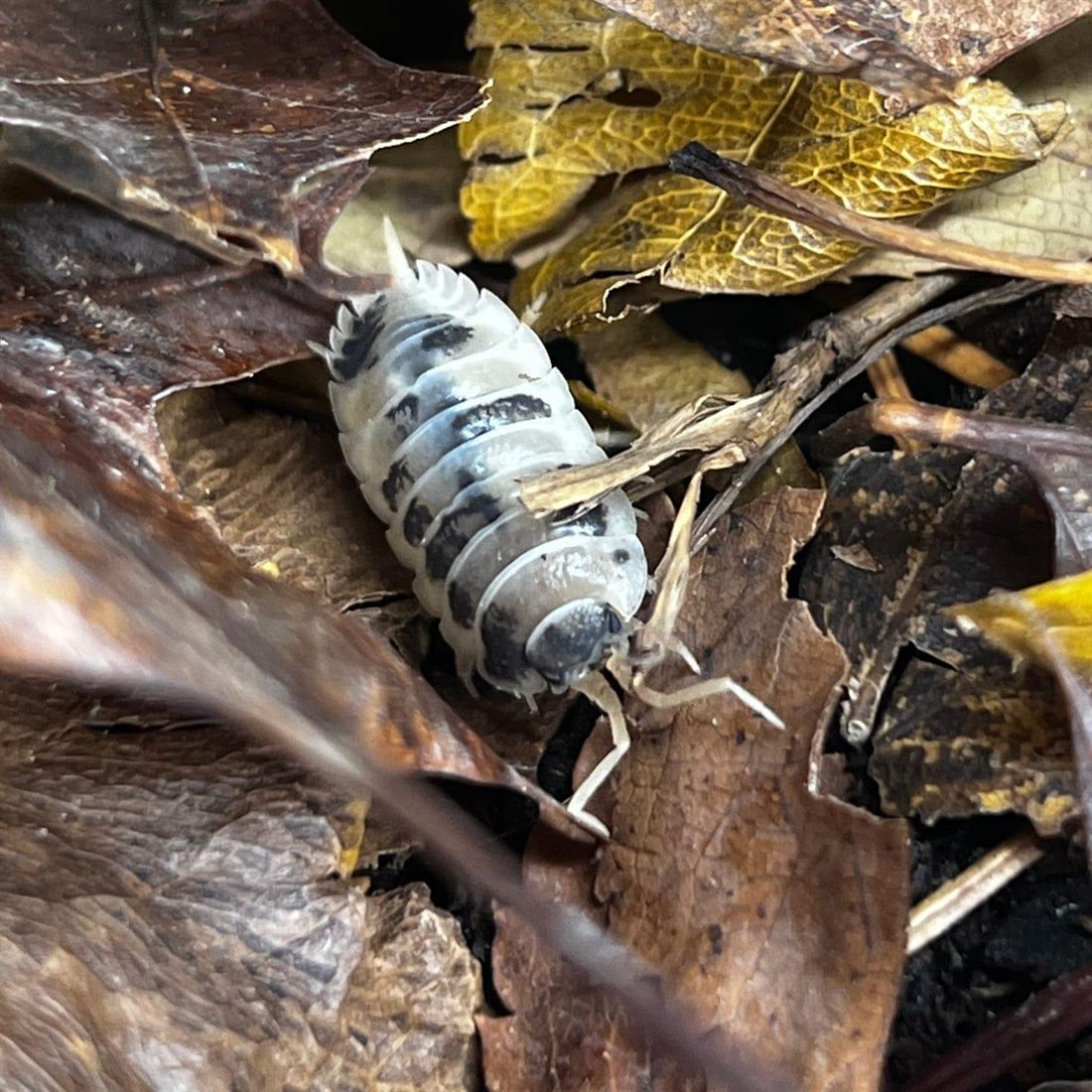
Oreo Crumble
Porcellionides pruinosus 'Oreo Crumble'Less common than standard Armadillidium morphs — give a new colony time before harvesting.
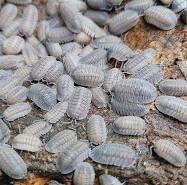
Peraccae
Armadillidium peraccaeCompact and hardy — rolls into a tight ball when disturbed and tolerates a range of humidity levels well.
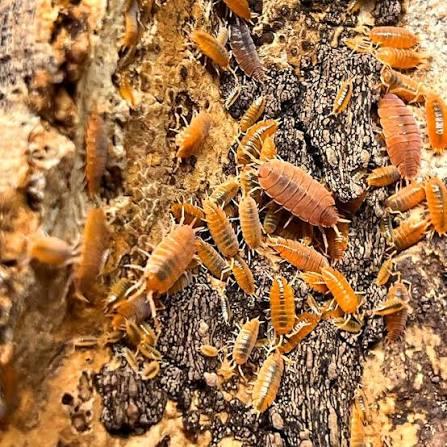
Powder Orange
Porcellionides pruinosus 'Orange'One of the most humidity-tolerant Porcellionides — forgiving of drier enclosures and fast to reproduce.
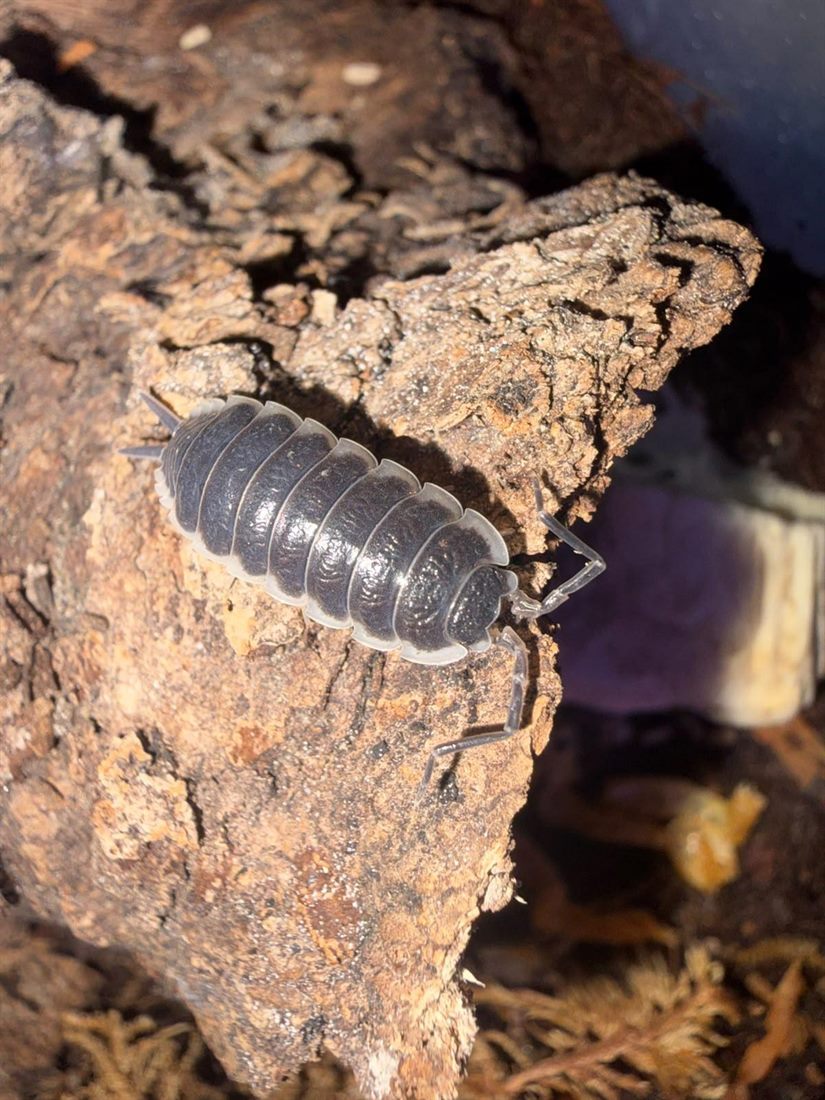
Sevilla
Porcellio sp. 'Sevilla'An uncommon Iberian species — good for keepers looking to diversify a Porcellio collection.
Terrarium Plant Care Guide
Keeping your greenery lush across moss, ferns, carnivorous and creeping segments.
Light Requirements
Almost every terrarium plant wants bright, indirect light rather than direct sun — glass and humidity intensify light and heat, so a windowsill in full sun can scorch leaves fast. A small LED grow light on a timer (10–12 hours a day) gives far more consistent results than natural light alone, especially for enclosed builds away from windows.
Humidity & Watering
Closed terrariums often need very little direct watering once established — condensation on the glass cycles moisture back into the substrate. Open or partially open setups need more regular misting or bottom-watering. Either way, a drainage layer beneath your substrate keeps roots from sitting in stagnant water, the single biggest cause of rot.
Choosing by Segment
Terrarium Moss and Mini Foliage (Java Moss, Selaginella, Fittonia) work best as low groundcover. Creeping Plants and Vines & Trailing (Creeping Fig, Pilea, Ficus Minima, Pothos) climb backgrounds or trail from height. Ferns (Boston Fern, Silver Fern) want a humid, shaded mid-to-background spot. Carnivorous plants like Drosera Adelae want bright indirect light and consistently moist, low-mineral substrate — and do genuine pest control alongside the display value.
Propagation
Vining plants like Pothos, Pilea and Ficus Minima root readily from stem cuttings placed directly in moist substrate. Java Moss and Selaginella propagate by division. Ferns and Drosera are best left to mature and be divided only once well established.
Common Issues
Leggy, stretched growth usually means insufficient light. Blackened, mushy stems point to overwatering or poor drainage. Browning fern fronds or a Drosera that stops producing dew almost always means humidity has dropped too low.
Species Quick Reference

Selaginella
Selaginella kraussianaUnlike true mosses, it browns quickly if the substrate ever fully dries — best suited to closed, stable terrariums.
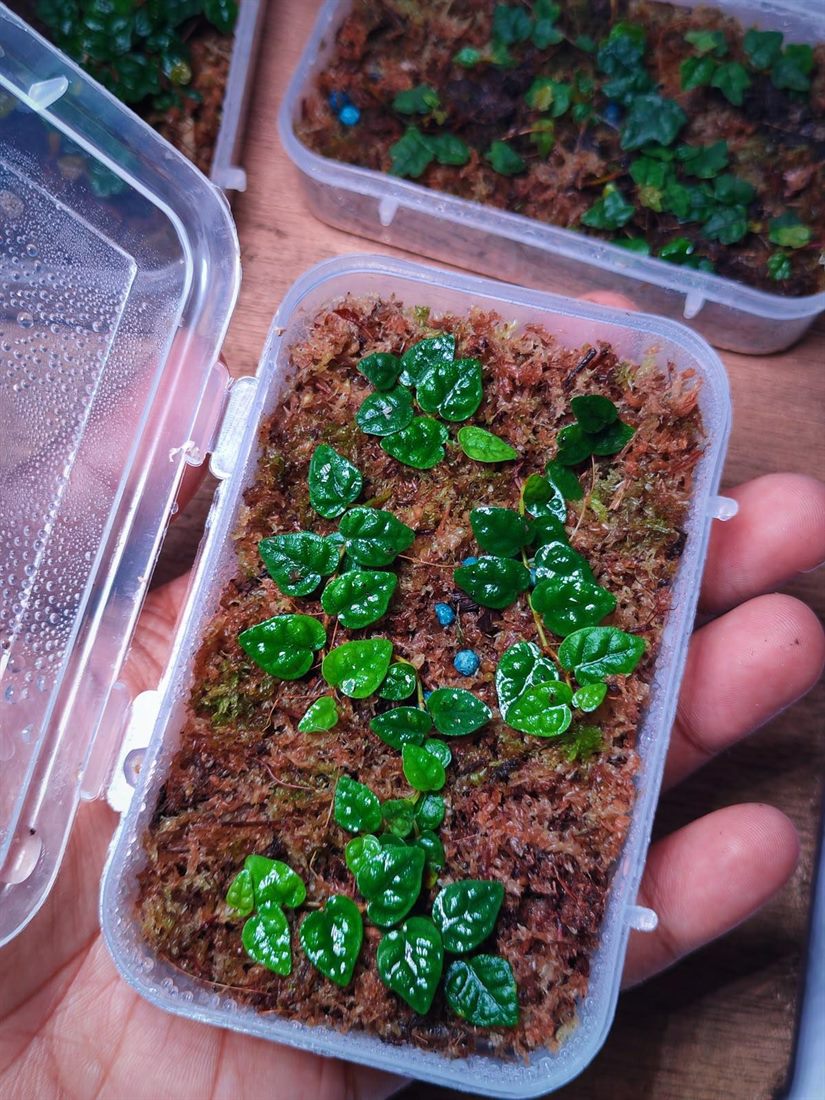
Ficus Minima
Ficus pumila 'Minima'A smaller-leaved alternative to standard creeping fig — better scaled for nano and mid-size builds.

Pilea Depressa
Pilea depressaTrim regularly to keep it as a low creeper — left unchecked it will climb over neighbouring plants.

Boston Fern
Nephrolepis exaltataWants more humidity than most houseplant ferns — best in a closed or high-humidity terrarium, not open air.
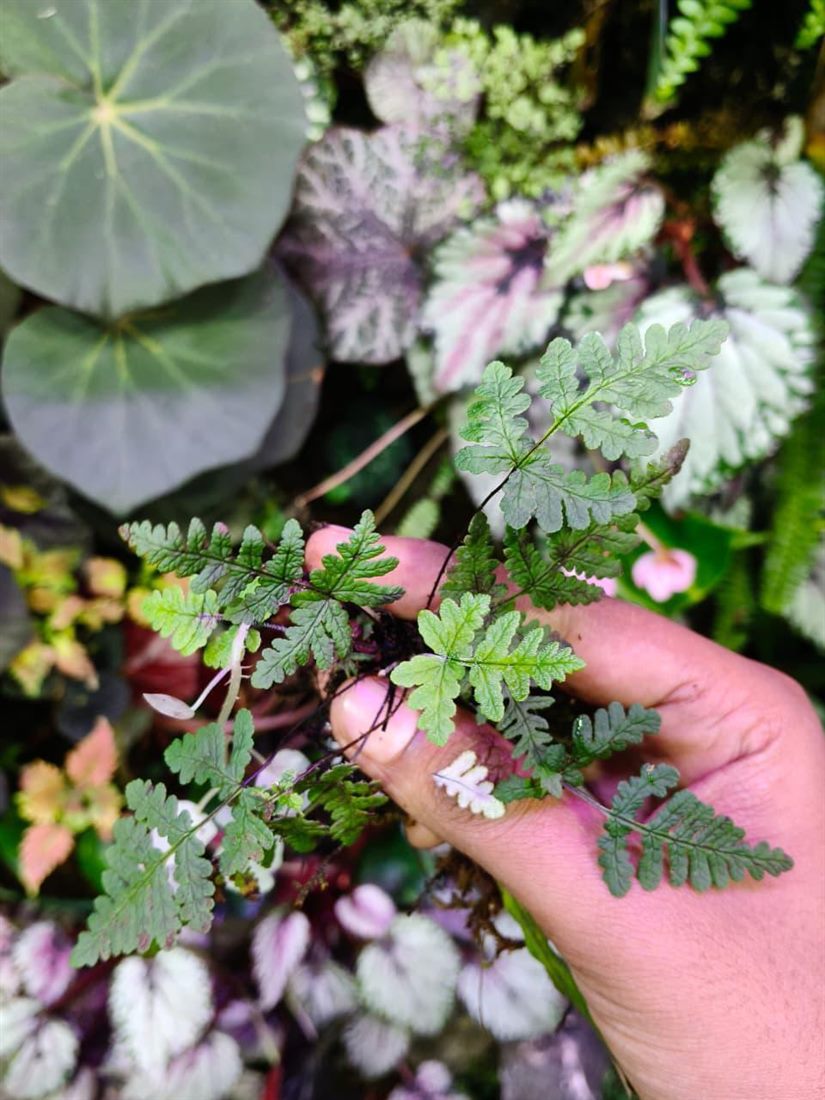
Silver Fern
Pityrogramma calomelanosThe silver-grey striping is most vivid under filtered light — avoid direct sun, which bleaches the pattern.
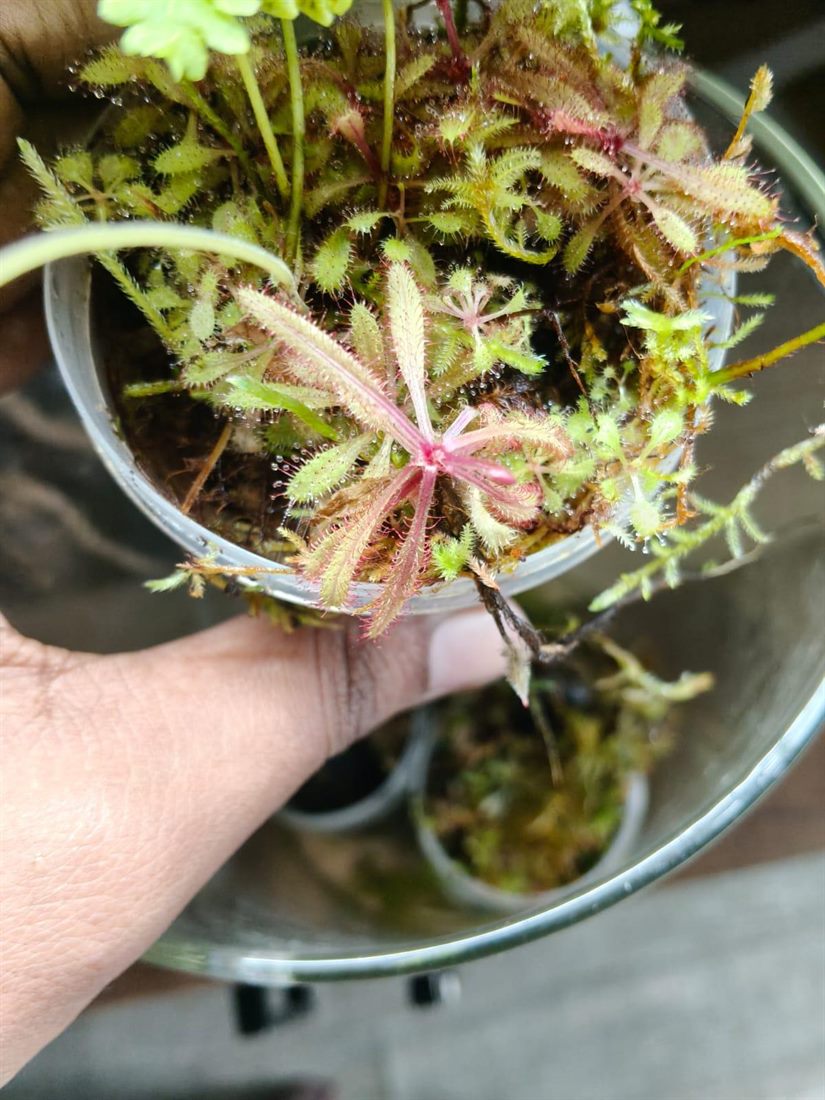
Drosera Adelae (Lance-Leaf Sundew)
Drosera adelaeUse rainwater or distilled water — tap water minerals build up and stress true carnivorous plants over time.

Mondo Grass
Ophiopogon japonicusOne of the few grass-like plants that tolerates enclosed humidity long-term — great for vertical contrast.
Isopod Supplies — Setup & Usage Guide
How to layer substrate, leaf litter and cleanup crew starters into a thriving isopod enclosure.
Building Your Substrate Base
Start with an optional drainage layer (clay balls, lava rock, or gravel) topped with a substrate barrier if your build is very wet, then add 2–4 inches of bioactive substrate mix as the main layer plants root into and isopods burrow through. Deeper substrate holds humidity gradients better and gives burrowing species more room to thrive.
Leaf Litter & Cork Bark
Scatter leaf litter generously across the surface — it's both a grazing food source and physical cover for isopods and springtails. Cork bark adds vertical structure, doubles as a climbing surface for creeping fig or java moss, and creates dry micro-hides that balance out an otherwise humid enclosure.
Introducing Springtails
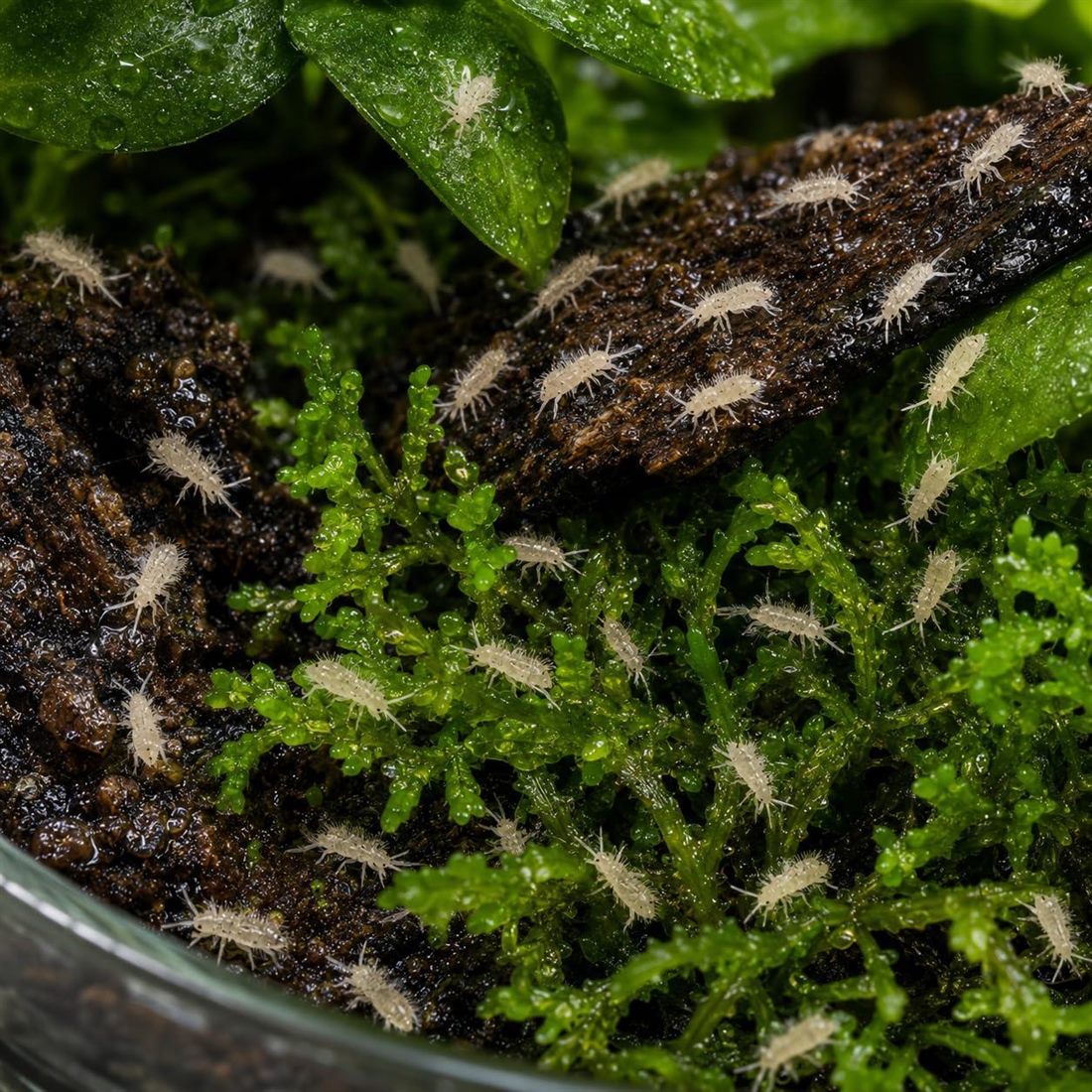
Seed your cleanup crew — springtails first, then isopods — into a newly set-up enclosure a week or two before adding any main inhabitants. Our Tropical Springtails come in Small and Large culture sizes: Small suits a single nano-to-mid enclosure, Large is better for seeding multiple bins or a larger build where you want the population established faster.
Moisture & Humidity Management
Sphagnum moss is the easiest way to buffer humidity — packed into pockets or layered on the surface, it releases moisture slowly and evenly rather than in the humidity spikes you get from direct misting. Check substrate moisture by feel a few inches down rather than relying on the surface alone.
Maintenance Tips
Top up leaf litter as your cleanup crew grazes through it, and avoid letting substrate compact over time — a light stir every so often keeps it aerated. If you see mould blooms, it's almost always a ventilation or overwatering issue rather than a reason to remove your cleanup crew.
Species Quick Reference
Aquatic Plant Care Guide
Bucephalandra, Anubias and aquatic mosses for tanks and paludariums.
Mounting, Not Planting
Bucephalandra and Anubias both grow from a rhizome that will rot if buried in substrate. Tie them to driftwood or rock with thread, fishing line, or aquarium-safe glue — within a few weeks the rhizome roots will grip the hardscape on their own and any tie can be removed.
Light & CO2
Both genera tolerate low light well, which is exactly why they're aquascaping staples — no CO2 injection or intense lighting required, though moderate light and CO2 will speed up otherwise slow growth. Too much light without enough CO2 tends to invite algae on the leaves rather than helping the plant.
Aquatic Moss
Christmas Moss and Flame Moss can be tied to hardscape the same way, or left loose as a floating mat. Both do well across a wide range of light levels and provide excellent biological filtration surface. Trim back overgrowth periodically to keep the growth pattern (triangular for Christmas Moss, upright spirals for Flame Moss) visible.
Water Parameters
These plants are forgiving of a wide pH and hardness range. Avoid copper-based fertilisers or medications in a tank with these plants if you're also keeping invertebrates or other sensitive tankmates.
Common Issues
Melting or blackening leaves shortly after purchase is normal transition stress — new growth should appear within a few weeks. Algae on leaves usually means too much light relative to available nutrients; reduce photoperiod rather than removing the plant.
Species Quick Reference
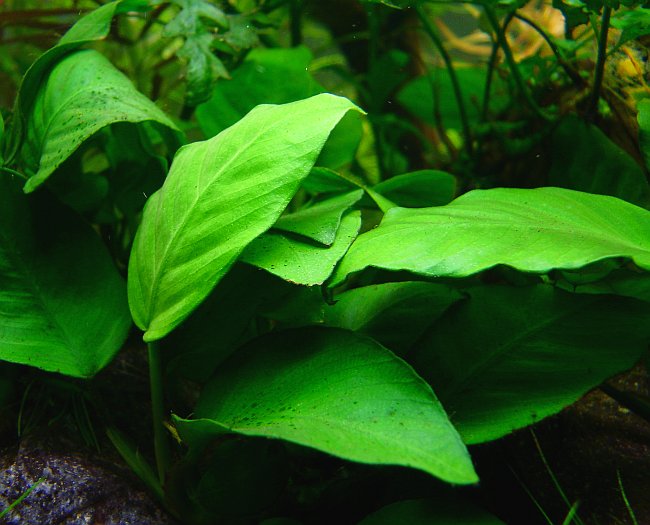
Anubias Barteri
Anubias barteri var. glabraLarger leaves than the nana variety — better suited to bigger tanks as a background anchor.

Christmas Moss
Vesicularia montagneiTrim regularly to keep the triangular fir-branch growth pattern visible and tidy.
Flame Moss
Taxiphyllum sp. "Flame"Grows upward in spirals rather than spreading flat — a striking vertical accent on driftwood.