Isopod Supplies — Setup & Usage Guide
How to layer substrate, leaf litter and cleanup crew starters into a thriving isopod enclosure.
Building Your Substrate Base
Start with an optional drainage layer (clay balls, lava rock, or gravel) topped with a substrate barrier if your build is very wet, then add 2–4 inches of bioactive substrate mix as the main layer plants root into and isopods burrow through. Deeper substrate holds humidity gradients better and gives burrowing species more room to thrive.
Leaf Litter & Cork Bark
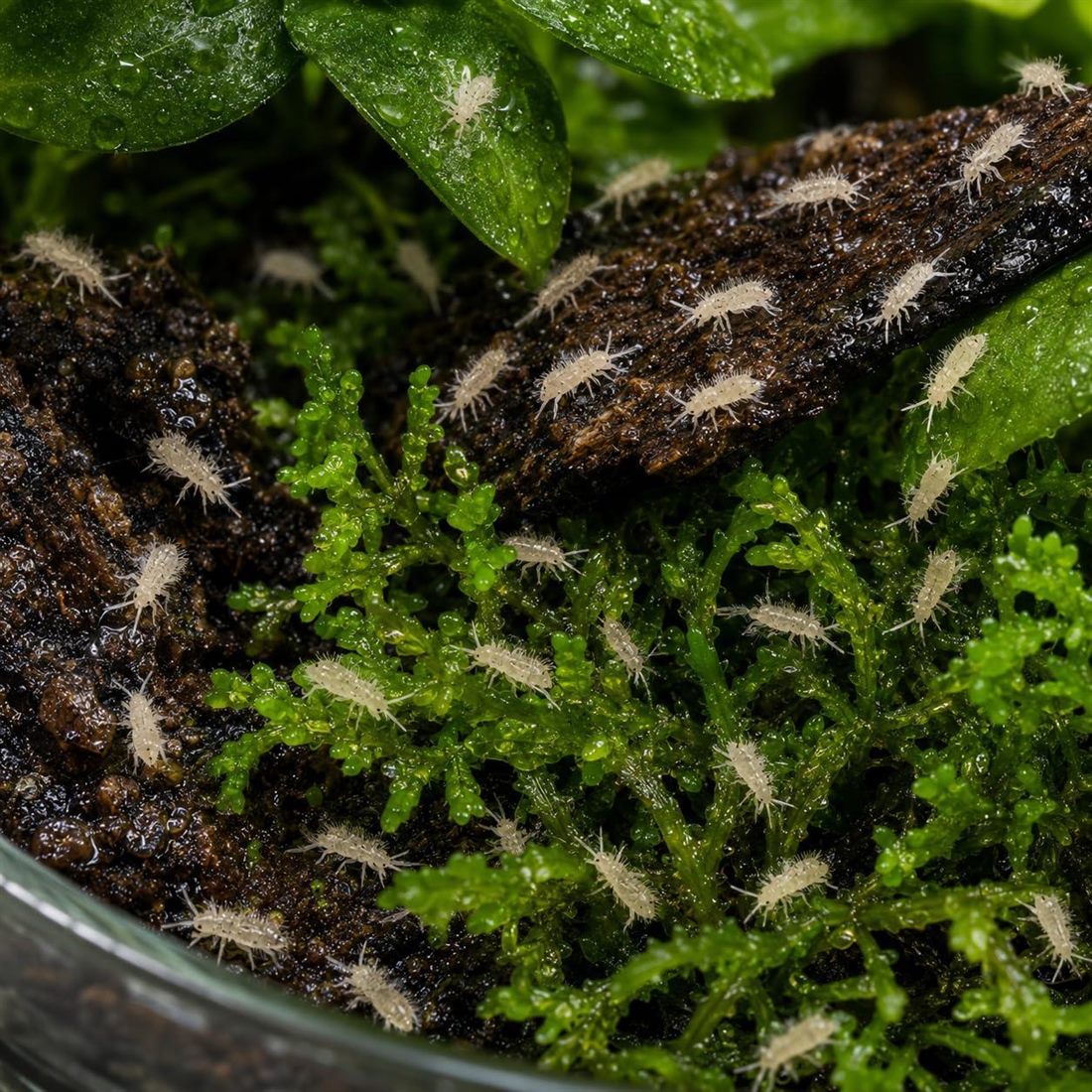
Scatter leaf litter generously across the surface — it's both a grazing food source and physical cover for isopods and springtails. Cork bark adds vertical structure, doubles as a climbing surface for creeping fig or java moss, and creates dry micro-hides that balance out an otherwise humid enclosure.
Introducing Springtails
Seed your cleanup crew — springtails first, then isopods — into a newly set-up enclosure a week or two before adding any main inhabitants. Our Tropical Springtails come in Small and Large culture sizes: Small suits a single nano-to-mid enclosure, Large is better for seeding multiple bins or a larger build where you want the population established faster.
Moisture & Humidity Management
Sphagnum moss is the easiest way to buffer humidity — packed into pockets or layered on the surface, it releases moisture slowly and evenly rather than in the humidity spikes you get from direct misting. Check substrate moisture by feel a few inches down rather than relying on the surface alone.
Maintenance Tips
Top up leaf litter as your cleanup crew grazes through it, and avoid letting substrate compact over time — a light stir every so often keeps it aerated. If you see mould blooms, it's almost always a ventilation or overwatering issue rather than a reason to remove your cleanup crew.