
Terrarium Plant Care Guide
Keeping your greenery lush across moss, ferns, carnivorous and creeping segments.
Light Requirements
Almost every terrarium plant wants bright, indirect light rather than direct sun — glass and humidity intensify light and heat, so a windowsill in full sun can scorch leaves fast. A small LED grow light on a timer (10–12 hours a day) gives far more consistent results than natural light alone, especially for enclosed builds away from windows.
Humidity & Watering
Closed terrariums often need very little direct watering once established — condensation on the glass cycles moisture back into the substrate. Open or partially open setups need more regular misting or bottom-watering. Either way, a drainage layer beneath your substrate keeps roots from sitting in stagnant water, the single biggest cause of rot.
Choosing by Segment
Terrarium Moss and Mini Foliage (Java Moss, Selaginella, Fittonia) work best as low groundcover. Creeping Plants and Vines & Trailing (Creeping Fig, Pilea, Ficus Minima, Pothos) climb backgrounds or trail from height. Ferns (Boston Fern, Silver Fern) want a humid, shaded mid-to-background spot. Carnivorous plants like Drosera Adelae want bright indirect light and consistently moist, low-mineral substrate — and do genuine pest control alongside the display value.
Propagation
Vining plants like Pothos, Pilea and Ficus Minima root readily from stem cuttings placed directly in moist substrate. Java Moss and Selaginella propagate by division. Ferns and Drosera are best left to mature and be divided only once well established.
Common Issues
Leggy, stretched growth usually means insufficient light. Blackened, mushy stems point to overwatering or poor drainage. Browning fern fronds or a Drosera that stops producing dew almost always means humidity has dropped too low.
Species Quick Reference

Selaginella
Selaginella kraussianaUnlike true mosses, it browns quickly if the substrate ever fully dries — best suited to closed, stable terrariums.
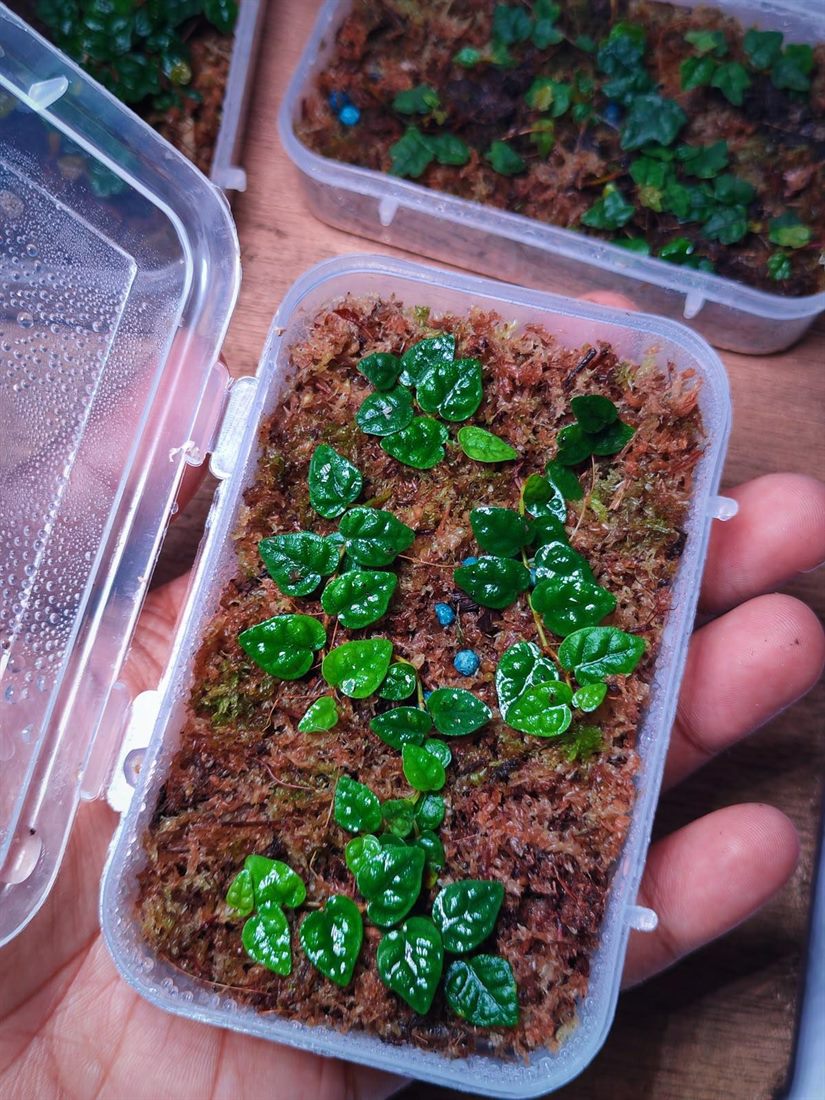
Ficus Minima
Ficus pumila 'Minima'A smaller-leaved alternative to standard creeping fig — better scaled for nano and mid-size builds.

Pilea Depressa
Pilea depressaTrim regularly to keep it as a low creeper — left unchecked it will climb over neighbouring plants.

Boston Fern
Nephrolepis exaltataWants more humidity than most houseplant ferns — best in a closed or high-humidity terrarium, not open air.
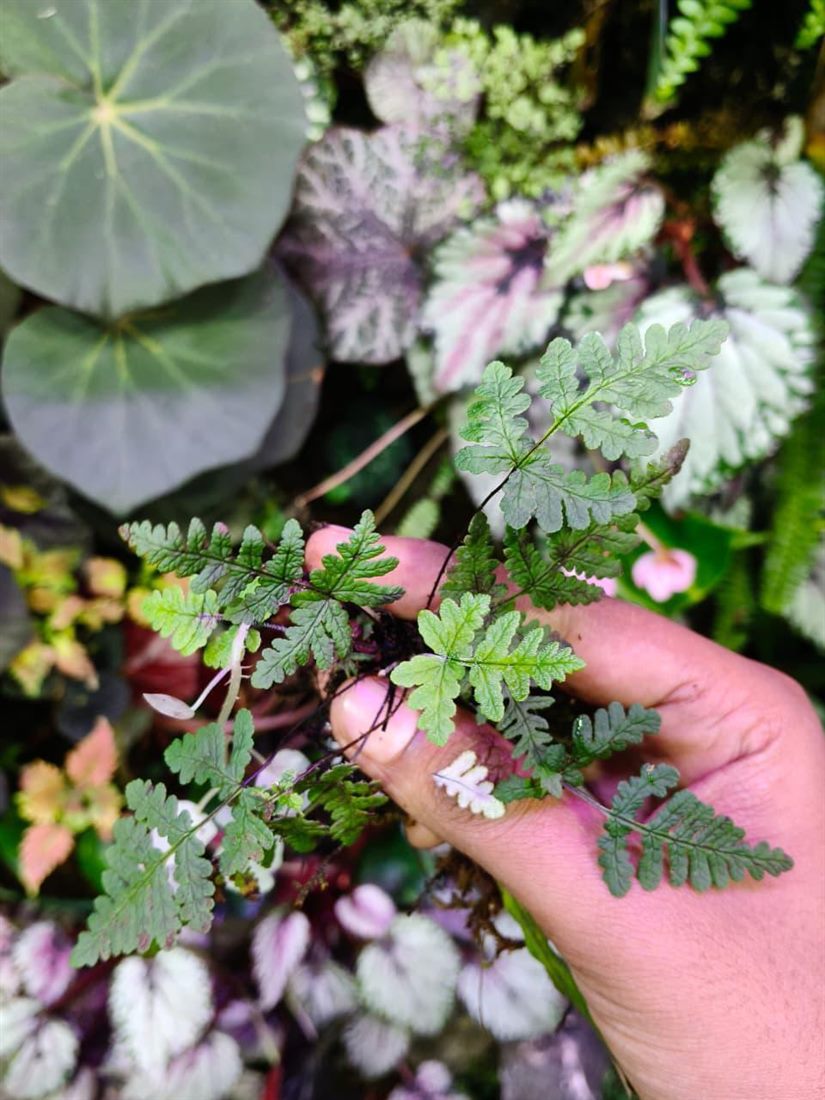
Silver Fern
Pityrogramma calomelanosThe silver-grey striping is most vivid under filtered light — avoid direct sun, which bleaches the pattern.
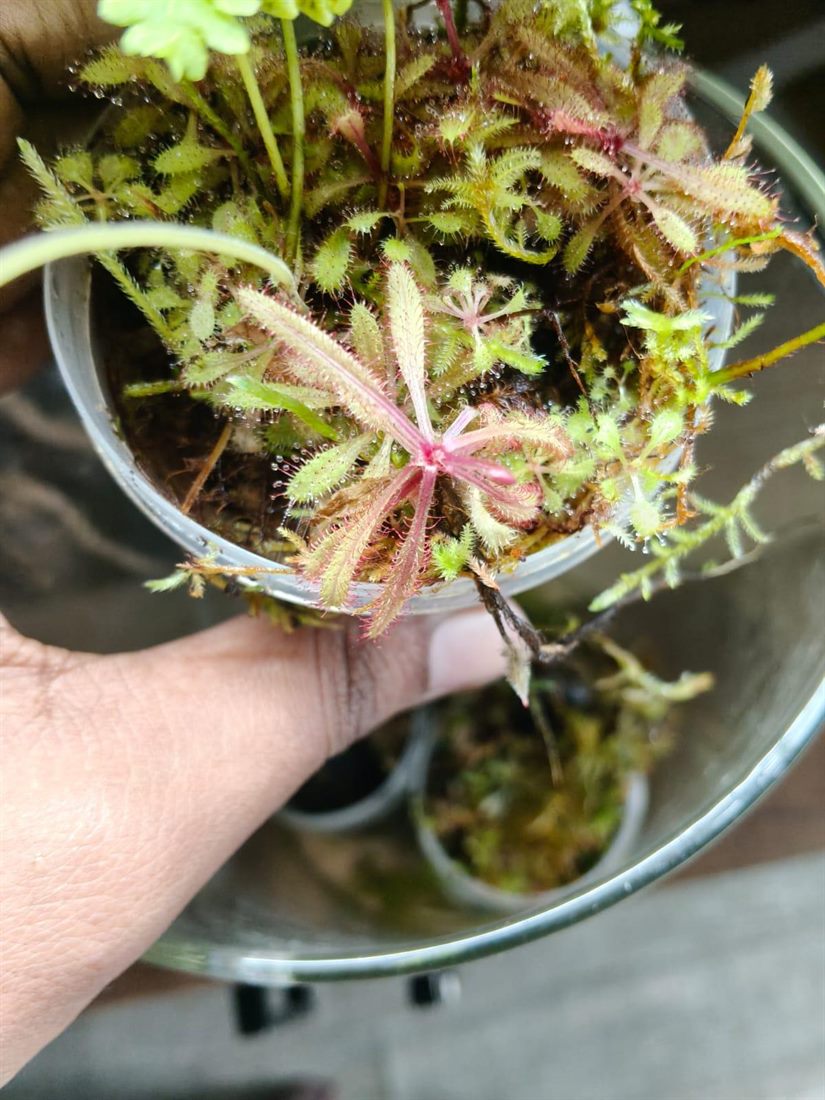
Drosera Adelae (Lance-Leaf Sundew)
Drosera adelaeUse rainwater or distilled water — tap water minerals build up and stress true carnivorous plants over time.

Mondo Grass
Ophiopogon japonicusOne of the few grass-like plants that tolerates enclosed humidity long-term — great for vertical contrast.