
Isopod Care Guide
Everything you need to keep a thriving, self-sustaining isopod culture.
Enclosure & Substrate
Give every culture at least 2–4 inches of bioactive substrate to burrow into — a coco fibre / sphagnum peat / leaf litter blend holds moisture well while staying loose enough to tunnel through. Add cork bark and a leaf litter layer for surface cover, and make sure the enclosure has ventilation; a fully sealed container invites mould faster than it helps humidity.
Temperature & Humidity
Most hobby isopods do best between 20–28°C, but humidity needs vary by species — some Armadillidium morphs want it consistently high, while hardier Porcellio and Porcellionides species tolerate a drier gradient. The safest approach is to mist one side of the enclosure only, so the colony can move between moist and dry zones as needed.
Diet & Feeding
Leaf litter should be the everyday staple — it's both food and shelter. Supplement every week or two with a protein source (fish flake, dried shrimp, or a small piece of dog biscuit) and a calcium source (crushed cuttlebone or eggshell) to support healthy moults. Remove uneaten protein within a day or two to avoid mites and mould blooms.
Breeding & Population Management
Females carry fertilised eggs in a fluid-filled brood pouch (the marsupium) and release fully formed mancae after a few weeks. Once a culture is established in the right substrate and humidity, breeding is continuous — population booms are a sign of a healthy setup, not a problem. Thin out an overcrowded culture by moving a portion to a new bin rather than letting density spike.
Common Mistakes
The most common culture crashes come from overwatering (leading to mould and grain mites), skipping calcium supplementation (leading to failed moults), mixing incompatible species in one enclosure, or sealing a container so tightly that fresh air can't reach the substrate. When in doubt, err toward more ventilation and a drier gradient.
Species Quick Reference
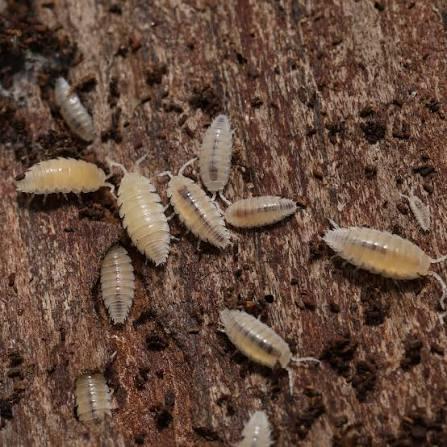
Dwarf White
Trichorhina tomentosaBest kept as a supplementary cleanup crew alongside springtails — rarely seen above the substrate surface.
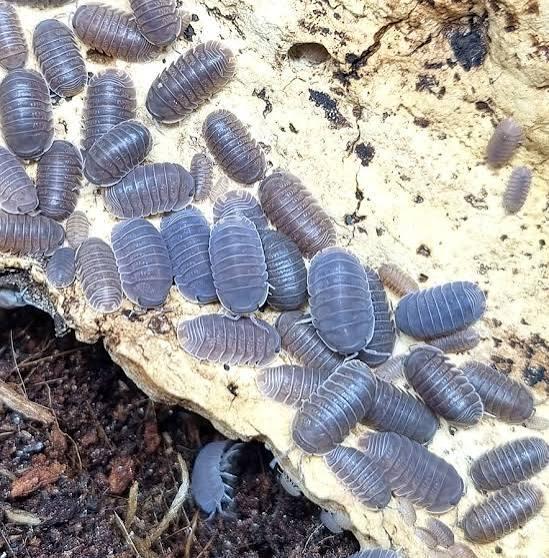
Murina Little Sea
Cubaris murina 'Little Sea'A soft blue-grey Cubaris that loves humidity — the easiest way to start keeping the genus.
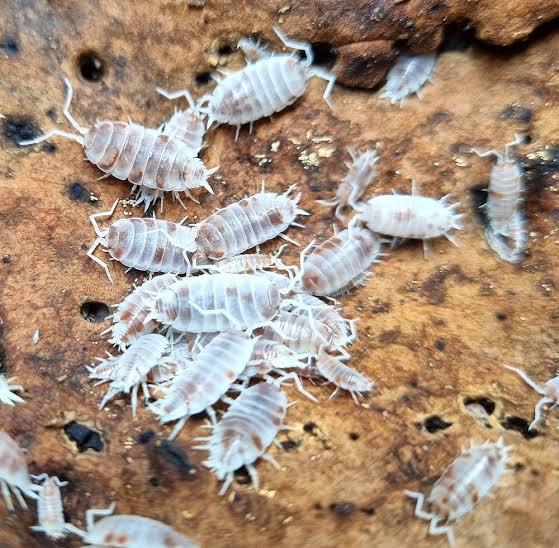
Orange Dalmatian
Porcellio scaber 'Orange Dalmatian'Speckle pattern gets more defined with age — hardy and easy to keep long-term.
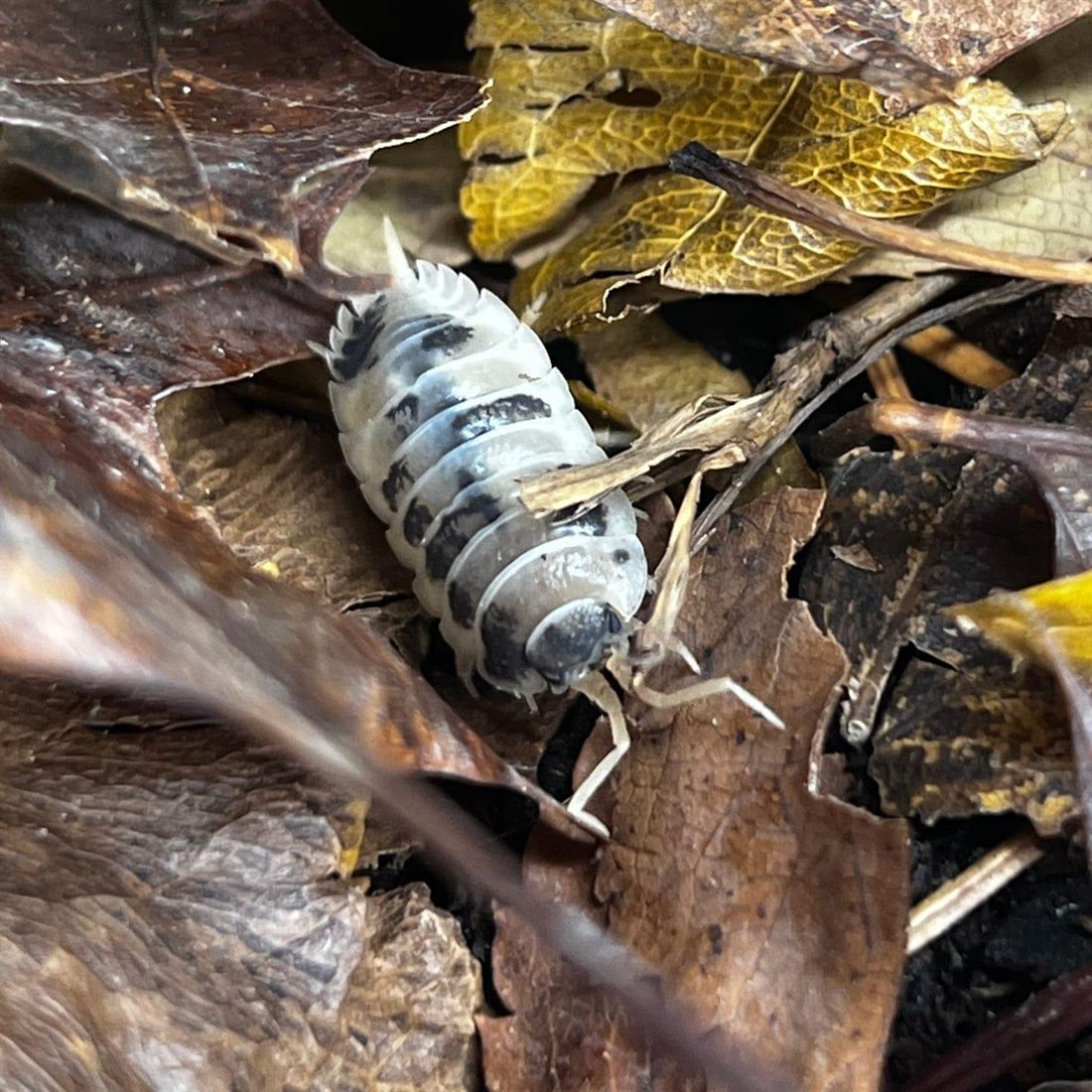
Oreo Crumble
Porcellionides pruinosus 'Oreo Crumble'Less common than standard Armadillidium morphs — give a new colony time before harvesting.
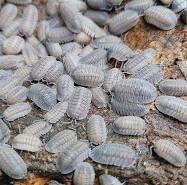
Peraccae
Armadillidium peraccaeCompact and hardy — rolls into a tight ball when disturbed and tolerates a range of humidity levels well.
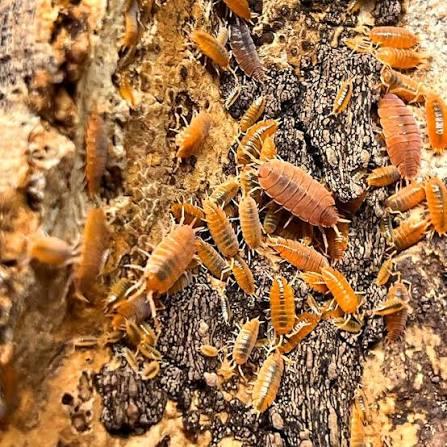
Powder Orange
Porcellionides pruinosus 'Orange'One of the most humidity-tolerant Porcellionides — forgiving of drier enclosures and fast to reproduce.
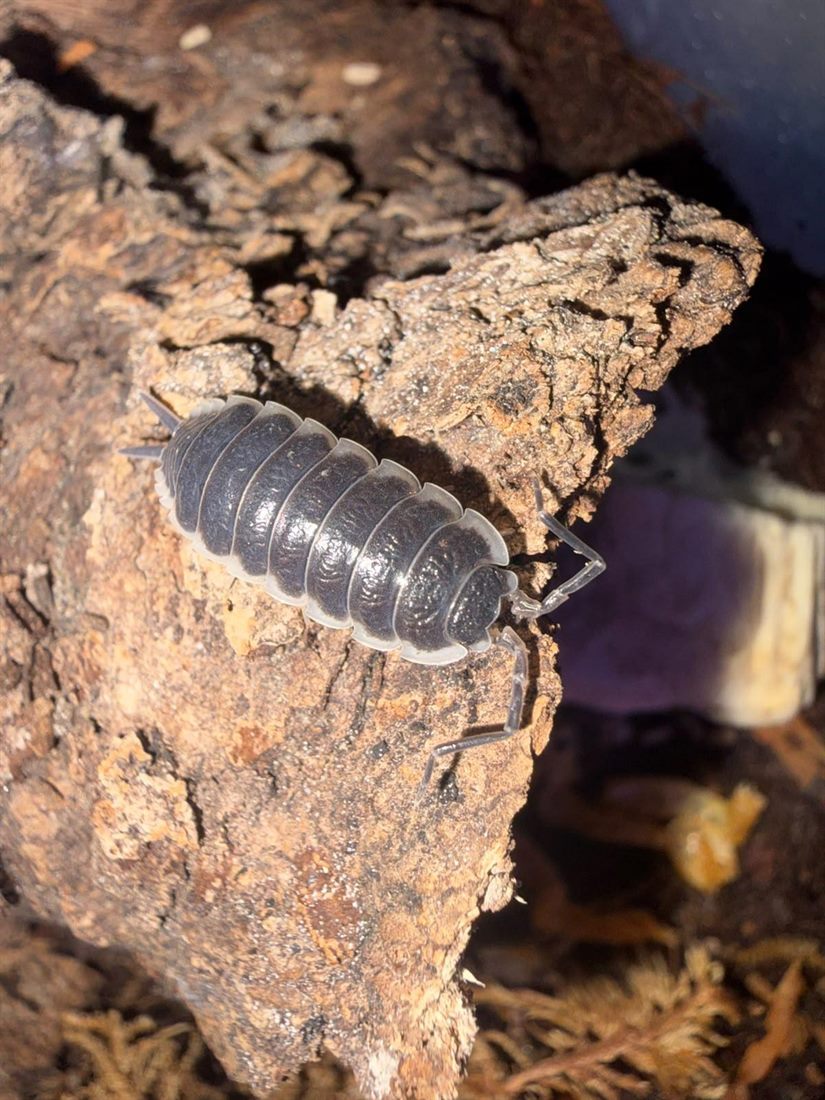
Sevilla
Porcellio sp. 'Sevilla'An uncommon Iberian species — good for keepers looking to diversify a Porcellio collection.