
Aquatic Plant Care Guide
Bucephalandra, Anubias and aquatic mosses for tanks and paludariums.
Mounting, Not Planting
Bucephalandra and Anubias both grow from a rhizome that will rot if buried in substrate. Tie them to driftwood or rock with thread, fishing line, or aquarium-safe glue — within a few weeks the rhizome roots will grip the hardscape on their own and any tie can be removed.
Light & CO2
Both genera tolerate low light well, which is exactly why they're aquascaping staples — no CO2 injection or intense lighting required, though moderate light and CO2 will speed up otherwise slow growth. Too much light without enough CO2 tends to invite algae on the leaves rather than helping the plant.
Aquatic Moss
Christmas Moss and Flame Moss can be tied to hardscape the same way, or left loose as a floating mat. Both do well across a wide range of light levels and provide excellent biological filtration surface. Trim back overgrowth periodically to keep the growth pattern (triangular for Christmas Moss, upright spirals for Flame Moss) visible.
Water Parameters
These plants are forgiving of a wide pH and hardness range. Avoid copper-based fertilisers or medications in a tank with these plants if you're also keeping invertebrates or other sensitive tankmates.
Common Issues
Melting or blackening leaves shortly after purchase is normal transition stress — new growth should appear within a few weeks. Algae on leaves usually means too much light relative to available nutrients; reduce photoperiod rather than removing the plant.
Species Quick Reference
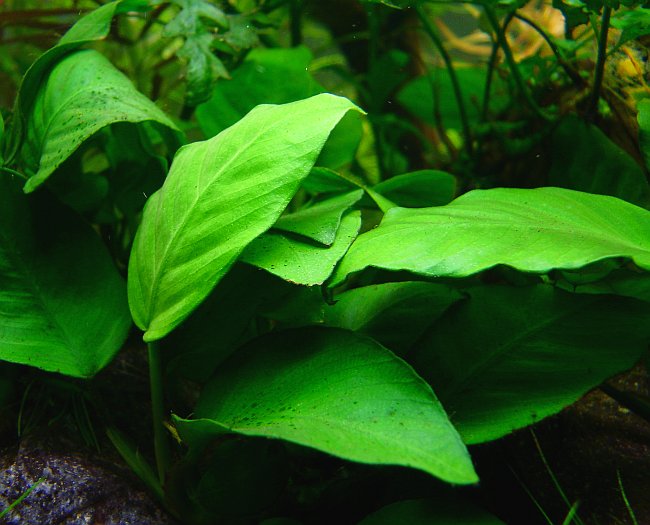
Anubias Barteri
Anubias barteri var. glabraLarger leaves than the nana variety — better suited to bigger tanks as a background anchor.

Christmas Moss
Vesicularia montagneiTrim regularly to keep the triangular fir-branch growth pattern visible and tidy.

Flame Moss
Taxiphyllum sp. "Flame"Grows upward in spirals rather than spreading flat — a striking vertical accent on driftwood.